
I’m Sydney, Master Certified wedding planner and designer behind My Event Buddee. After a decade producing elevated celebrations, here’s my honest take on 2026: invite fewer people, pour more love (and budget) into the experience. We’re talking immersive environments, editorial design, and hospitality that makes every guest feel like a VIP—because luxury isn’t “more stuff,” it’s more intention.
Below are the trends I’m actively designing into my couples’ weddings—and how I’ll bring them to life for you.
What I’m seeing: Couples are trimming the list to fund what guests actually remember—hospitality, atmosphere, and storytelling. The result is rooms that feel intimate, thoughtful, and saturated with care rather than crowded with obligations. Luxury = fewer touchpoints, executed flawlessly.
How I do it (design): I set a per-guest investment and design from that number outward—service ratios, tabletop quality, and environmental upgrades. We prioritize high-touch elements (chair comfort, glassware, linen hand-feel) and invest in moments guests physically interact with first. The visual story then stacks on top: lighting, florals, and paper that echo the same level of intention.

What I’m seeing: Weddings read like theatre—arrival, reveal, immersion, release. Guests move through curated scenes, not static stations, and the pacing is as designed as the palette. “Effortless” is actually highly produced.
How I do it (design): I storyboard the guest journey before I pick a single flower: sightlines, sound, scent, and wayfinding. Each scene gets a signature design cue (a fragrance bar, a chef pour, a lighting shift) and tactile comforts (shawls, cold towels, soft seating clusters). We script transitions so nothing feels abrupt—just a beautiful glide from one mood to the next.
What I’m seeing: Single-hue palettes are surging, but the luxe version is dimensional: tone, texture, finish, and light create depth. Think butter yellow in velvet, matte ceramic, silk ribbon, and a gentle gel wash—same color, different attitudes.
How I do it (design): We select one hero hue and build a value scale (light–mid–deep) to avoid flatness. I layer textures—velvet + satin + gauze + lacquer—and repeat the color across paper, florals, candles, and drape for cohesion. A tailored lighting plan (temperature and beam spread) “gels” the room so the monochrome reads cinematic, not matchy.

What I’m seeing: Airy meadows and dancing stems replace dense mounds; asymmetry feels alive and editorial. It’s romantic without chaos—negative space is part of the composition.
How I do it (design): I engineer ground florals first to frame people, not just spaces—aisles, stages, and seating vignettes become the canvas. Stem choice is intentional: a few varieties with strong silhouette for clarity, plus height variation for movement. Repurpose points are pre-designed (not improvised) so the story continues into cocktails and reception without feeling relocated.
What I’m seeing: In-the-round and spiral layouts collapse the distance between couple and guests, and ceilings become part of the set. Ceremony is no longer “point and shoot”; it’s immersive architecture.
How I do it (design): We draft seating curves to create intimacy and camera-friendly angles, then scale florals low and sculptural so faces stay visible. Overhead, I’ll choose one strong move—fabric drape, floral clouds, or focused beam lighting—to define the vertical plane. Directional audio and pin-spotting complete the envelope so the whole space frames the vows.
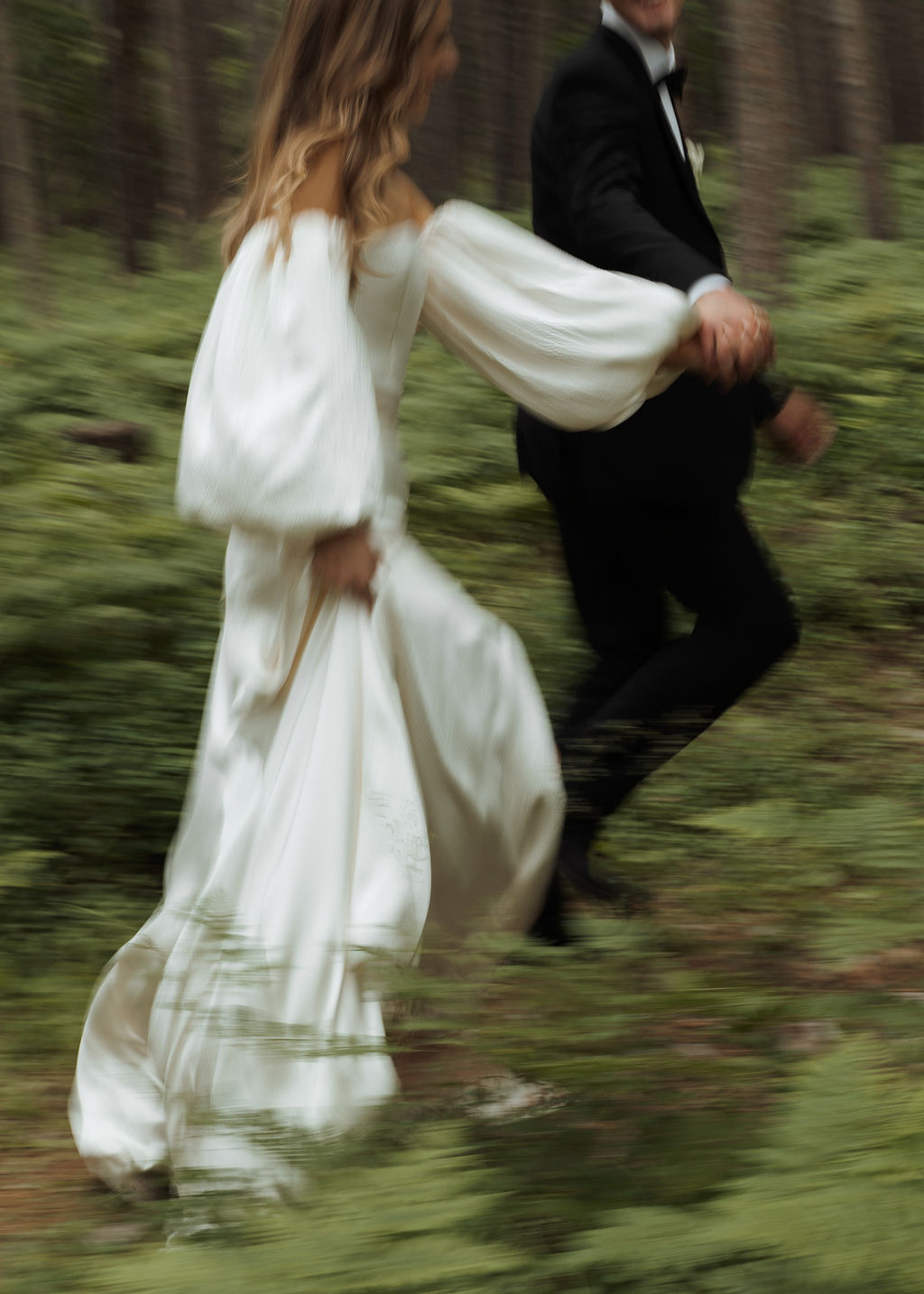
What I’m seeing: Heirloom texture (35mm/Super 8) pairs with modern shareability (next-day reels). Couples want the romance of grain and the immediacy of social storytelling.
How I do it (design): I design with camera in mind—matte finishes over extra-shiny where glare is an issue, controlled candle height for sparkle, and considered backdrops for depth. The creative team gets a shared shot list with lighting looks and timing for transitions. Ceremony stays phone-free; reception welcomes playful documentation with a few styled “content corners.”
What I’m seeing: Chrome, stainless, and mirror add gallery polish—especially in modern venues—while brass steps back to supporting role. Reflective surfaces amplify light and crisp silhouettes.
How I do it (design): I balance cool metals with creamy textiles (think textured ivory and soft stone) and smoked glass for warmth. On tabletops: mirrored accents sit beside matte ceramic or linen to prevent a “too cold” read. Repetition is key—place the metal in three zones (tabletop, bar, ceiling) so it feels intentional, not random.
What I’m seeing: Lighting is the storyteller: pin spots to sculpt florals, narrow beams for art moments, subtle gels to unify monochrome palettes, and a late-night flip that cues the party. Great lighting is the difference between “pretty” and “cinematic.”
How I do it (design): I draft a lighting plot like a set designer—ambient base, focal accents, and transitions. Color temperature stays flattering (generally 2700–3000K), and we layer beam angles to carve depth into the room. We program Look 1 (arrival/dinner) and Look 2 (dance/after-party) so guests feel the energy build.

What I’m seeing: Paper is décor and branding—letterpress menus, blind-debossed monograms, silk-thread details, and sculptural signage. The stationery suite carries the identity across touchpoints.
How I do it (design): I create a visual system early—typography, monogram, motif, and color hierarchy—then echo it on bar fronts, dance-floor decals, gifting, and wayfinding. Materials matter: cotton stock, deckled edges, wax and fabric for tactile layers. The result is a cohesive brand that feels bespoke without shouting.
What I’m seeing: Intimate headcounts unlock a three-act narrative: teaser palette at the welcome party, monochrome showpiece on wedding day, playful twist at brunch or after-party. Guests feel hosted, not herded.
How I do it (design): I keep one through-line (shape, motif, or flower) and let palettes flex by chapter so each event has its own mood. Rentals are planned cross-event, so key pieces migrate and re-style efficiently. We design photo-forward vignettes for each chapter so the story reads beautifully in person and in the gallery.
My sweet spot is translating your personality into an editorial-level experience that runs flawlessly. I’ll map the journey, cast the creative team, build the palette, florals, paper, and lighting plan, and manage every moving piece so you can be a guest at your own wedding.
Ready to start? Book your complimentary consultation and let’s create the most talked-about party of your life.